<< Back
10 Foods That Can Help With Hypertension
January 16, 2026
High blood pressure doesn’t usually announce itself. For many people, it builds quietly in the background until it starts affecting your heart health, without warning signs or obvious symptoms.
But daily choices matter more than you might think — especially when it comes to food. What you eat can either nudge your numbers higher or help bring them down.
“Diet is one of the most powerful tools we have to help control blood pressure,” says Bradley Biskup, PA, a lifestyle medicine specialist with the Heart & Vascular Institute at Hartford HealthCare. “Certain foods are naturally high in nutrients like potassium, magnesium and fiber, which support healthier blood vessels and lower pressure.”
Here are ten foods that can help support healthier blood pressure if you’re managing hypertension.
1. Leafy greens
There’s a reason they top almost every healthy eating list.
Spinach, kale, and Swiss chard are loaded with potassium, a key nutrient that helps your body flush out excess sodium — one of the main culprits behind high blood pressure.
“Think of potassium as nature’s counter to salt,” says Biskup. “The more you have, the easier it is for your body to regulate blood pressure.”
Toss a handful into a smoothie, sauté them with garlic or add to soups and grain bowls for an easy boost.
> Related: 6 Reasons to Eat More Spinach
2. Berries
Blueberries, strawberries and raspberries aren’t just sweet — they’re also packed with antioxidants called flavonoids.
“These compounds help relax blood vessels and improve circulation,” says Biskup. “A handful of berries a day can be a great snack.”
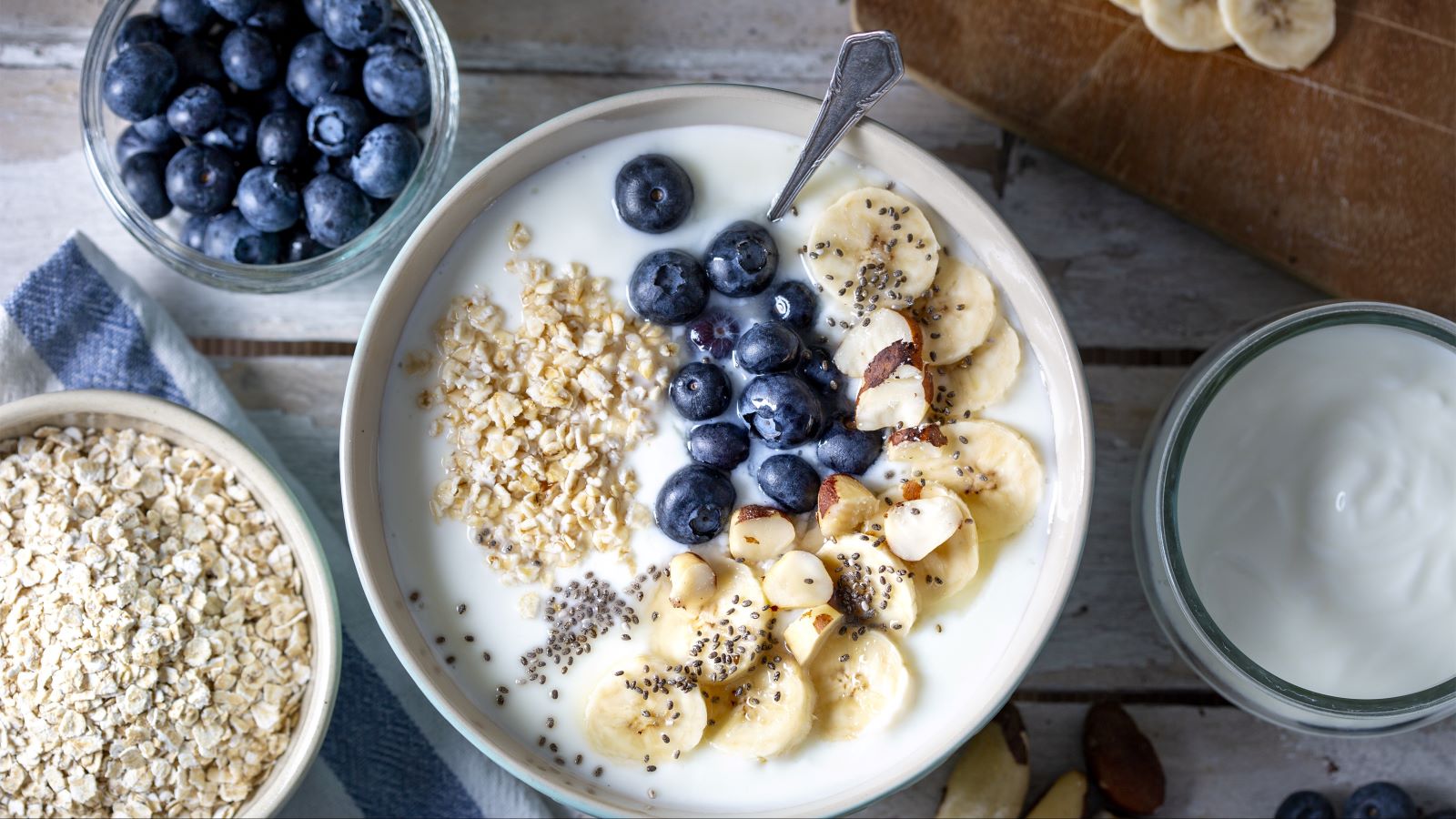
Add berries to yogurt, oatmeal or a salad, or keep a bag of frozen ones on hand for a quick smoothie fix.
> Related: 6 Fruits and Vegetables Worth Adding to Your Plate This Fall
3. Oats
Your morning bowl of oatmeal is doing more than keeping you full — it’s quietly protecting your heart.
Oats are high in soluble fiber, which helps lower cholesterol and reduce blood pressure over time.
“Fiber slows digestion and helps keep blood sugar steady. Both are important for overall heart health,” Biskup notes. “Just be sure you’re having either rolled or old fashioned oats, since they are slower to be broken down and have less of a glycemic (sugar) affect compared to quick oats.”
Try topping with fruit to add some bonus nutrients.
> Related: 4 Things to Know About High Blood Pressure
4. Bananas
Portable, inexpensive and naturally sweet — bananas are one of the easiest ways to boost potassium.
“Just one banana provides about 10% of your daily potassium needs,” says Biskup. “It’s an easy snack with big benefits.”
Slice one over cereal, blend into a smoothie or enjoy with a spoonful of peanut butter for an easy morning bite.
> Related: This Common Ingredient Could Be Causing Your Hypertension
5. Fatty fish
Salmon, mackerel, and sardines aren’t just tasty — they’re packed with omega-3 fatty acids that help lower inflammation and improve blood vessel function.
“Omega-3s have a direct impact on heart and vascular health,” Biskup says. “They can help reduce blood pressure and support healthy cholesterol levels. Just look out for the sodium content in sardines, or any ‘fatty fish’ from a can.”
For the best results, try grilling or baking salmon once a week.
6. Nuts and seeds
Almonds, walnuts, chia seeds and flaxseeds deliver heart-healthy fats, fiber and magnesium.
“Magnesium helps relax your blood vessels,” says Biskup. “A small handful of nuts or seeds every day is a great option.”
Sprinkle seeds over yogurt, add nuts to a salad or grab a handful for an afternoon snack.
> Related: 8 Heart-Healthy Snacks to Add to Keep You Going
7. Beans and lentils
Packed with fiber and plant-based protein, legumes are a staple of the heart-healthy Mediterranean diet.
“They provide slow-digesting carbs, which helps prevent blood sugar spikes that put stress on the arteries,” Biskup says.
Toss chickpeas into a salad, swap lentils for ground meat in tacos or stir beans into soups and stews.
> Related: 4 Reasons to Eat More Lentils
8. Beets
They’re vibrant, earthy, and yes — they’re a superfood.
Beets are rich in nitrates, which your body converts into nitric oxide, a compound that widens blood vessels.
“Beets are one of the few foods that can have an immediate, measurable impact on blood pressure,” says Biskup. “Drinking beet juice can lower pressure within hours.”
Roast them, slice them into salads or try a glass of beet juice before your next workout.
9. Low-fat dairy
Sigh of relief – you don’t have to ditch dairy. In moderation, foods like yogurt, milk and cheese can provide calcium and protein without too much saturated fat.
“Calcium is essential for vascular health,” Biskup notes. “Low-fat or preferably non-fat dairy is a great way to get it, without the drawbacks of full-fat versions.”
Try Greek yogurt with fruit for breakfast, or add a splash of skim milk to your coffee instead of cream.
> These Six Foods Can Lower Your Blood Pressure Naturally
10. Flax seed
It may be tiny, but flaxseed packs a powerful punch.
It’s rich in omega-3s, fiber, and protein — a trio that supports healthy blood pressure and overall heart function.
“Two tablespoons a day can lower blood pressure by up to 10 mm Hg,” says Biskup. “Just make sure it’s ground so your body can absorb the nutrients.”
Add it to oatmeal, smoothies or even baked goods for an easy nutritional upgrade.
Small changes can make a big difference
Lowering your blood pressure doesn’t require a total diet overhaul. In fact, consistency matters more than perfection, and simple swaps can go a long way.
“Even small changes add up,” says Biskup. “If you swap one or two foods a day for healthier options, you’ll see the benefits over time.”
When you fill your plate with foods that your blood pressure will benefit from, you’re giving your heart the daily support it deserves.